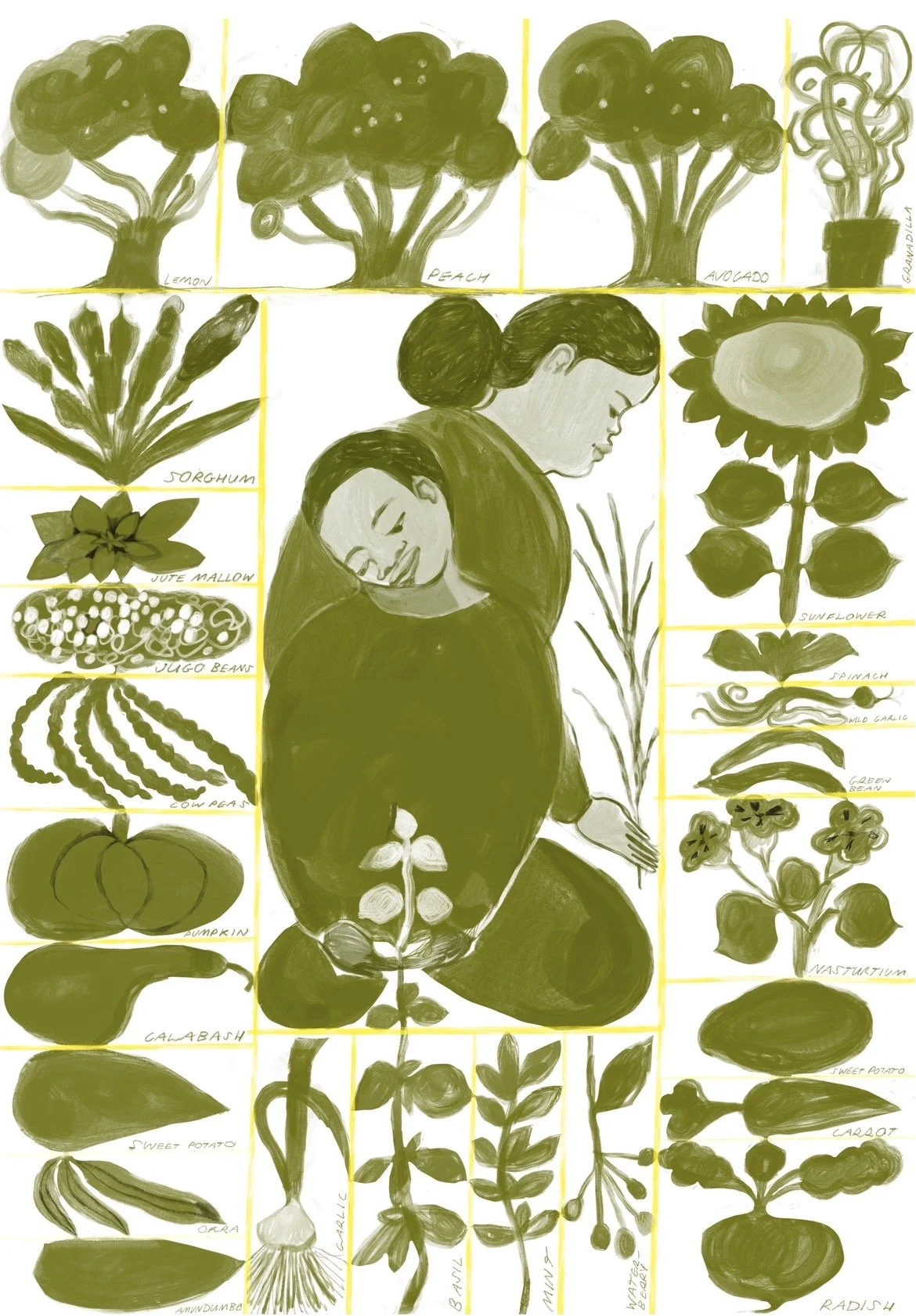
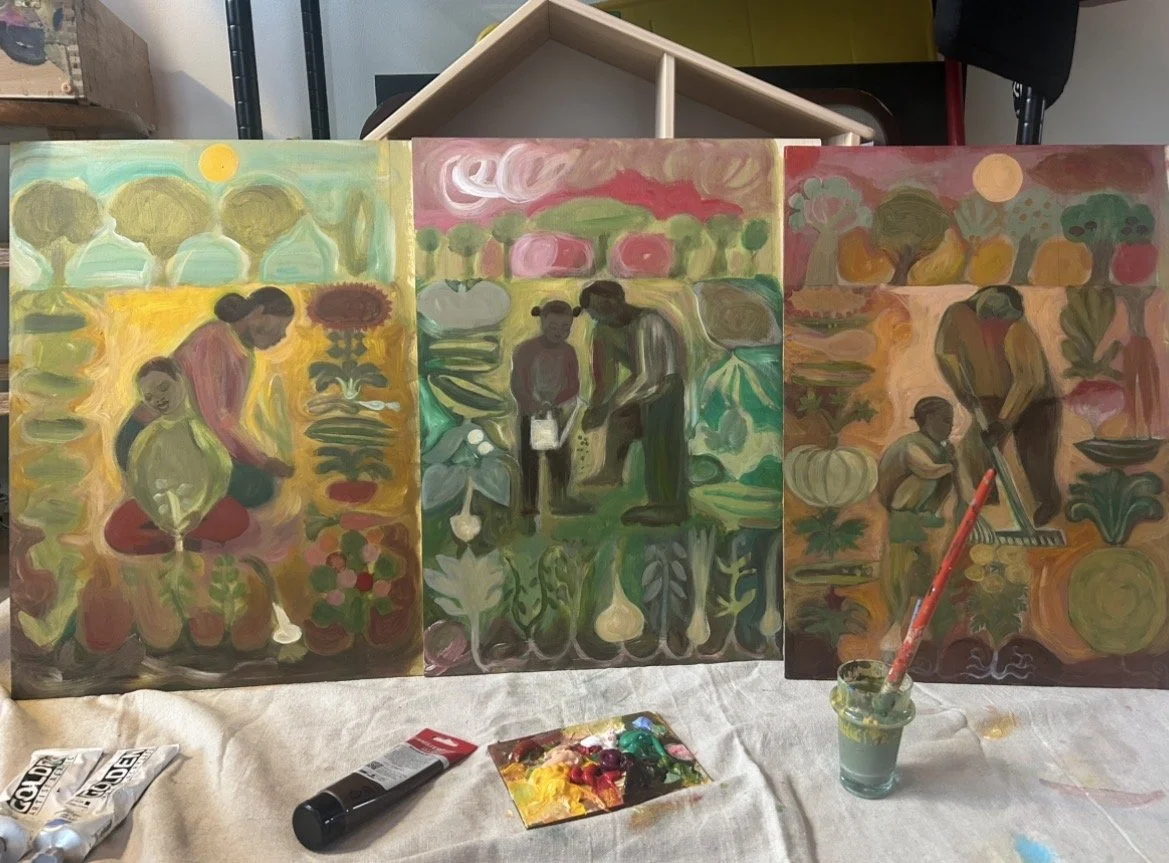
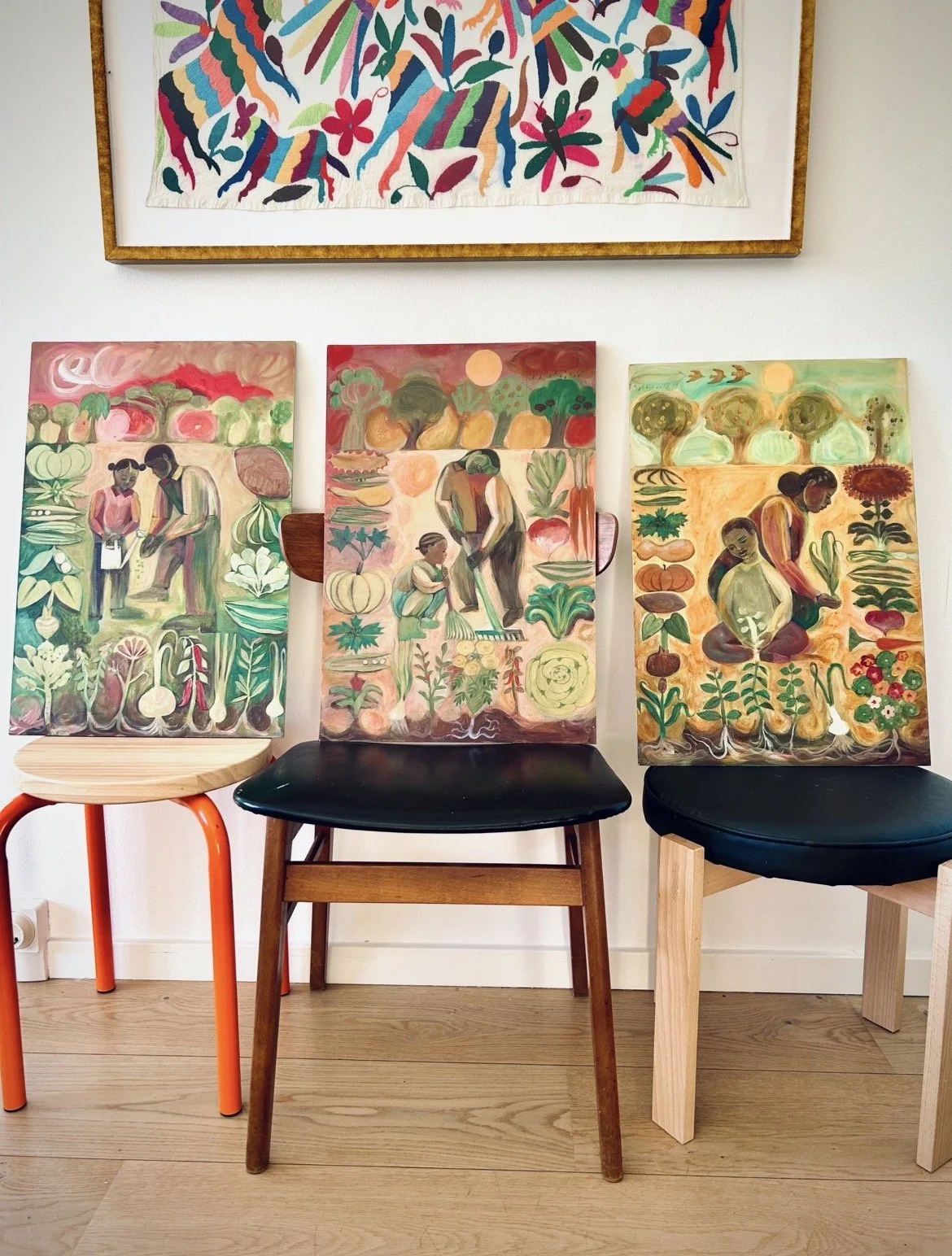
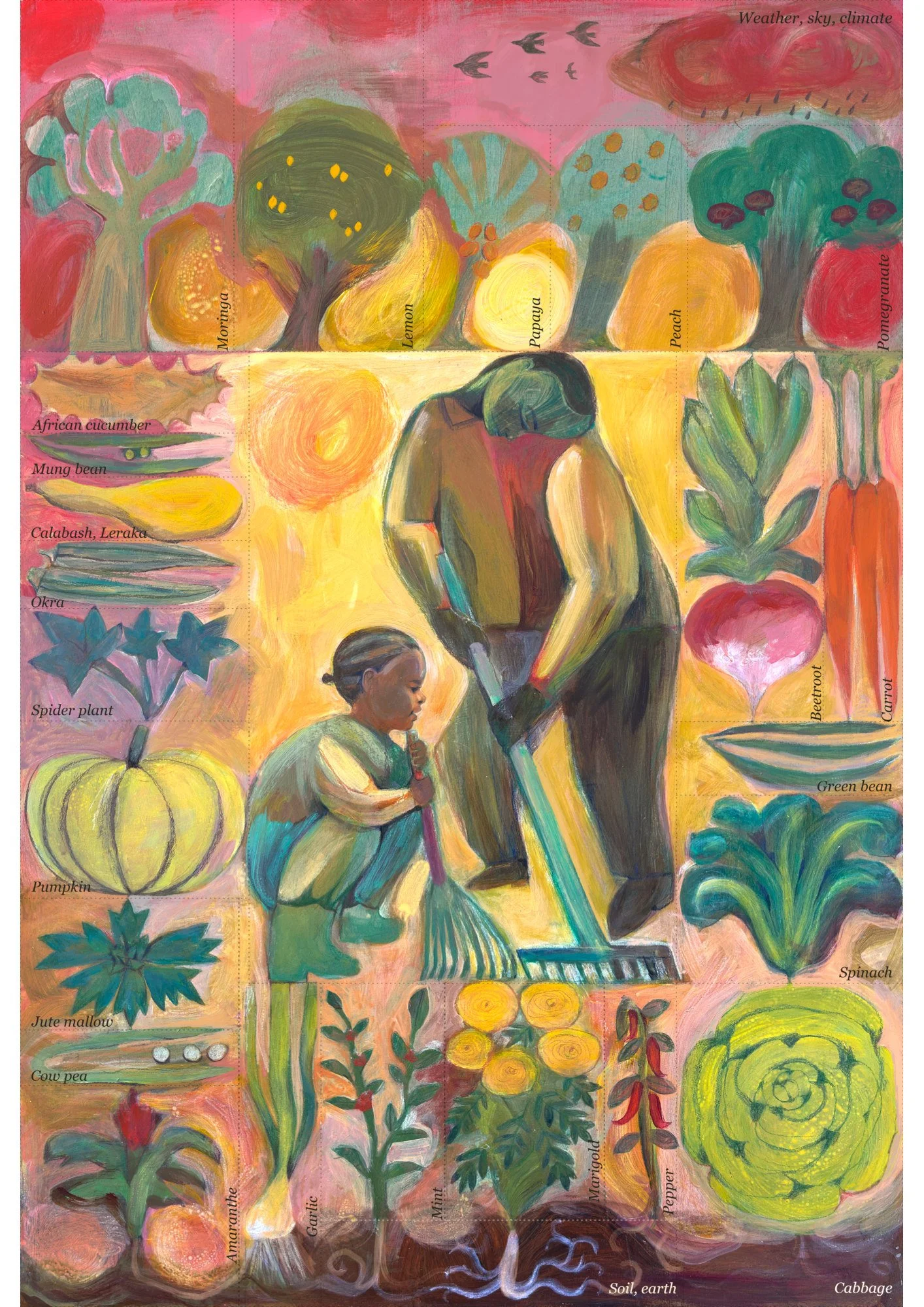
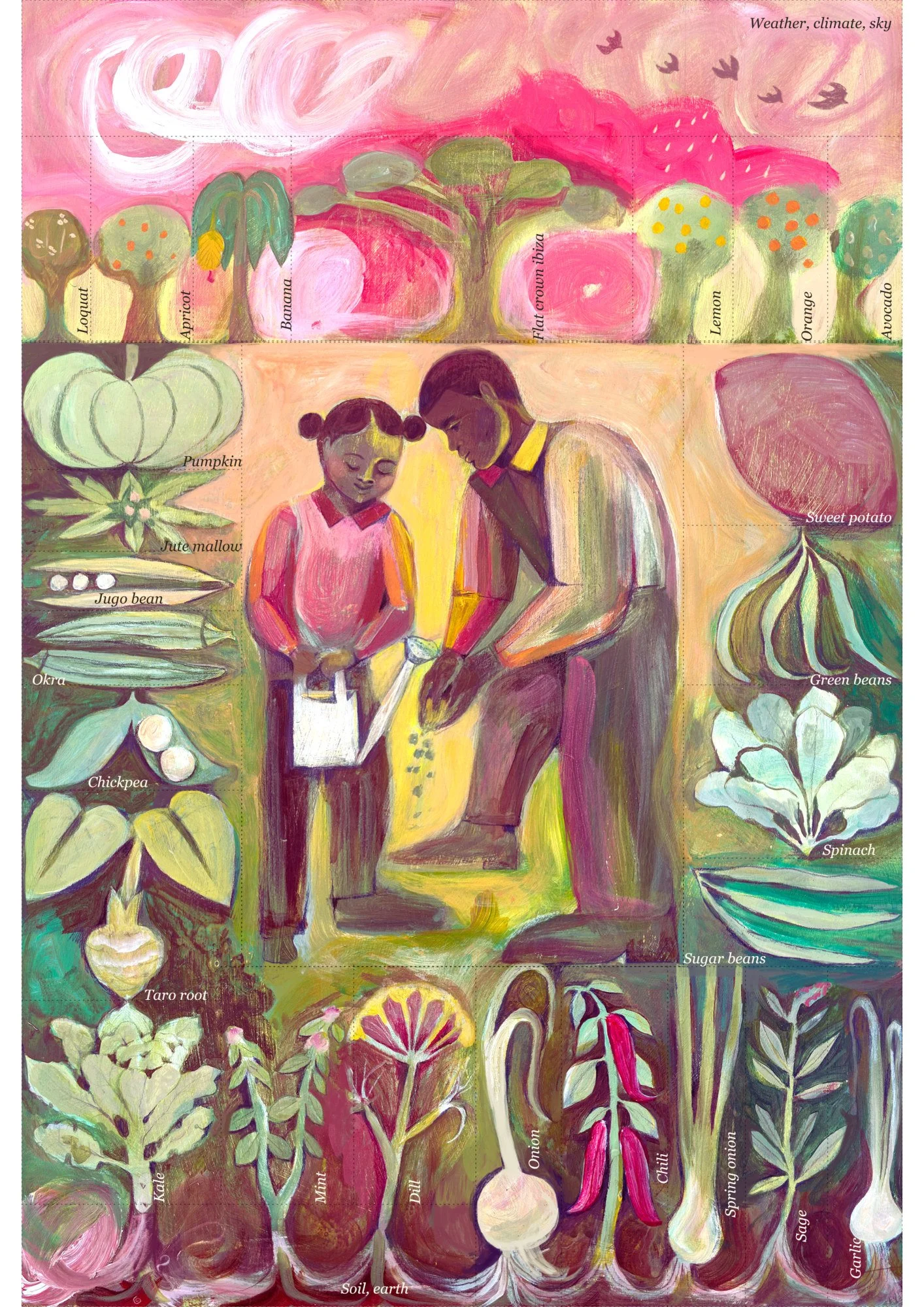
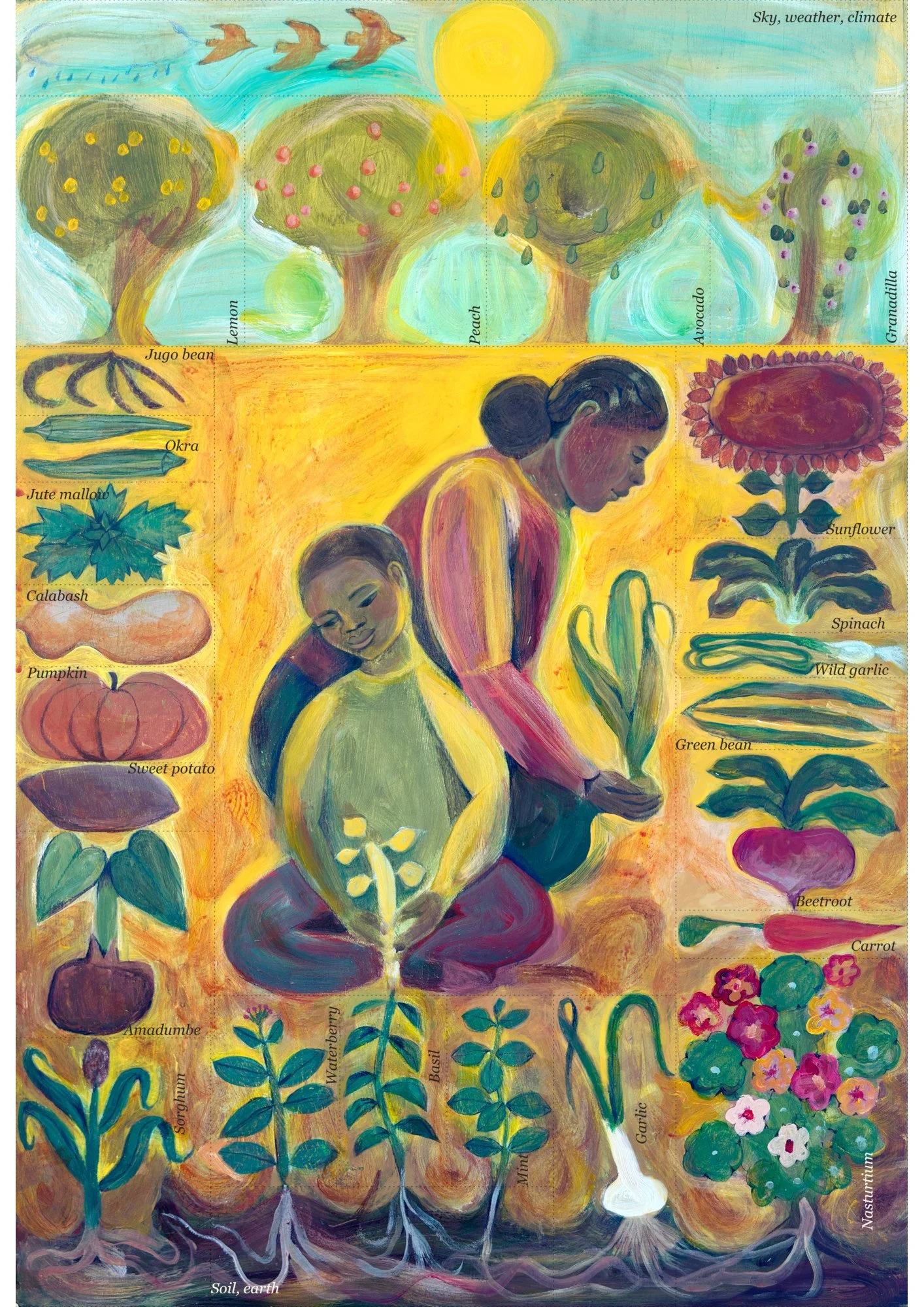
These three portraits are part of an activity I created for the University of Toronto Childhood Place Pedagogy Lab’s Communities Collaborating for Ecological Thriving codesign project that centres on climate-smart school gardens in South Africa’s Gauteng, KwaZulu-Natal and Limpopo provinces.
The wider project brings Indigenous Local and Ecological Knowledges (ILEK) together with climate science to support children’s wellbeing, intergenerational learning, relationships with land, and climate adaptation.
The artworks portray community members surrounded garden compositions co created in the project’s community design circles. Each portrait includes traditional plants, plants that provide shade, non-traditional plants, and repellent plants.
KwaZulu-Natal province plant grouping portrait.
The approach draws on Entangled Time Tree paper (2024) by Naomi Terry et al, which centres African storytelling and recognises how multiple histories and ways of imagining can create a broader set of possible futures to work toward. The activity takes participants through a series of questions around family and community history and how to find and carry ancestral knowledge that is at risk of being lost.
The activity is also inspired by Donna Haraway’s work and discussions around string figures (Staying with the Trouble (2016)), especially as they relate to more deeply experiencing more-than-human perspectives to develop a richer understanding of ecological interconnections and growing our care and responsibilities for other species and our surroundings.
The art mapping activity will take place in South Africa’s Gauteng, KwaZulu-Natal and Limpopo provinces in November 2026.
Limpopo province plant grouping portrait.
The paintings will act as a frame for documenting a range of relationships: between people and plants, between plants and other plants, between humans and more than humans and their environments, and more. The art will be divided into it's plant fragments and then connection will be made with strings and paper. The resulting web creates a collective visual record of relationships with food, family, other species, soil, water, weather, seasons, and climate, which participants can revisit and extend.
Gauteng province plant grouping portrait.